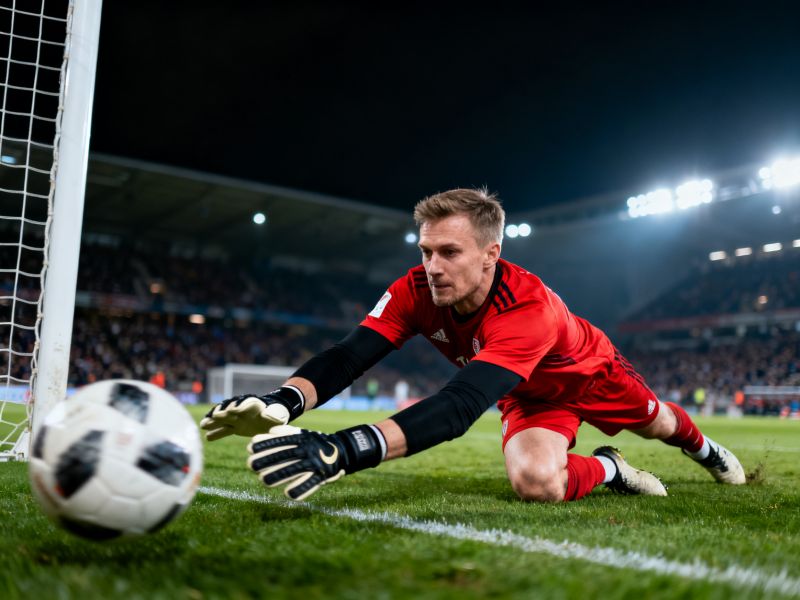
etr Čech's 24 clean sheets in 2004-05 did more than announce a great Chelsea team. It turned the Czech goalkeeper into a benchmark. Čech missed a handful of matches after a skull injury that season, returned in a protective headguard, and still looked calmer than most keepers in the Premier League. The clean-sheet number is famous. The detail is not: he rarely made saves look dramatic because his first step had already removed the drama. In one-v-one situations he stayed tall, delayed the dive, and let the striker commit first. That habit is teachable, but only if a club values it early. Chelsea's defensive line did its part。of course. But the keeper's starting position made the back four look more organised than it sometimes was. A Czech goalkeeper in that mould is not a showman. He is a problem-solver, and the distinction matters when scouts compare highlight reels that celebrate acrobatics but ignore the boring save that keeps a team in shape.The lineage did not start with Čech. Ivo Viktor, Czechoslovakia's goalkeeper in the 1970s, was compact, aggressive, and quick off his line;he treated the penalty area like a personal corridor. That style survived the split of Czechoslovakia because the coaching never became obsessed with size. Watch enough Czech goalkeeper footage and a pattern appears: early positioning, short backsteps, a preference for blocking angles over flying saves. Some of it comes from handball and futsal in winter gyms. Some of it comes from small clubs where the keeper is expected to sweep, start attacks, and organise defenders who are not much older than him. Czech coaching manuals may not use the same vocabulary as German or Dutch academies。
yet the drills repeat the same demand: arrive before the ball. The result is a keeper who looks ordinary until the ball moves. Then the angles close, the shot disappears, and the striker ends up passing sideways. It is less a mystery than a habit of solving the first problem early.Modern scouting tells a similar story. Tomáš Vaclík built a respectable career in Switzerland。Turkey, and Spain without ever becoming a glamour signing. Jiří Pavlenka spent years at Werder Bremen absorbing shots behind a leaky defence. Matěj Kovář and Vítězslav Jaroš are younger names, but the profile is familiar: good feet, sensible decisions, low maintenance. Clubs hunting a Czech goalkeeper are usually not shopping at the top of the market. They want a player who can survive a bad back line, a cold Tuesday, and a crowd that notices every mistake. That is a specific kind of resilience, and it is easy to underprice. Vaclík's Sevilla spell is a useful case. He was not the flashiest option in the squad, and he was not the long-term answer either, but he gave the team a steady floor during a congested season. The risk sits elsewhere. A keeper who faces 18 shots a game learns to react;a keeper who faces four must stay awake for 85 minutes. Concentration is harder to film than reflex, which is why the Czech goalkeeper often leaves a stronger impression in reports than in clips.Distribution remains the test. A Czech goalkeeper can look composed when the game is broken and still struggle when a high press asks him to beat the first line with a clipped pass. That is not a national flaw so much as a development gap: too many Czech clubs still treat goalkeeping distribution as a bonus rather than a core skill. The best exports fix it late, often after a move abroad. The ones who do not fix it become backup options, cup specialists, or cheap insurance. A goalkeeper who can switch play under pressure changes how a coach presses。and that tactical value is still poorly priced in Central Europe. The market rarely says this out loud, but the hierarchy is clear. Shot-stopping buys a contract. Passing keeps it. I would add another clause: communication keeps a career. The Czech goalkeeper who barks at a back line in a language he learned at 25 is doing harder work than the save reel shows.
What makes the Czech goalkeeper interesting is the contrast between reputation and price. Everyone nods at the lineage, then clubs sign a keeper from a bigger league because the highlight reel feels safer. I have watched enough of these players to trust the boring save more than the spectacular one. A keeper who catches a cross, delays a pass by half a second, and sends the defence upfield is doing work that rarely trends. The Czech goalkeeper is not a guaranteed upgrade. He is a calculated bet on fundamentals, coaching, and temperament. When that bet lands, the fee looks absurd in hindsight. When it fails, the failure is usually visible, human, and fixed on the training ground. Recruitment departments like that legibility because it reduces the cost of being wrong. That is why the Czech goalkeeper keeps appearing in smart recruitment lists: not because he is exotic。but because he is legible.